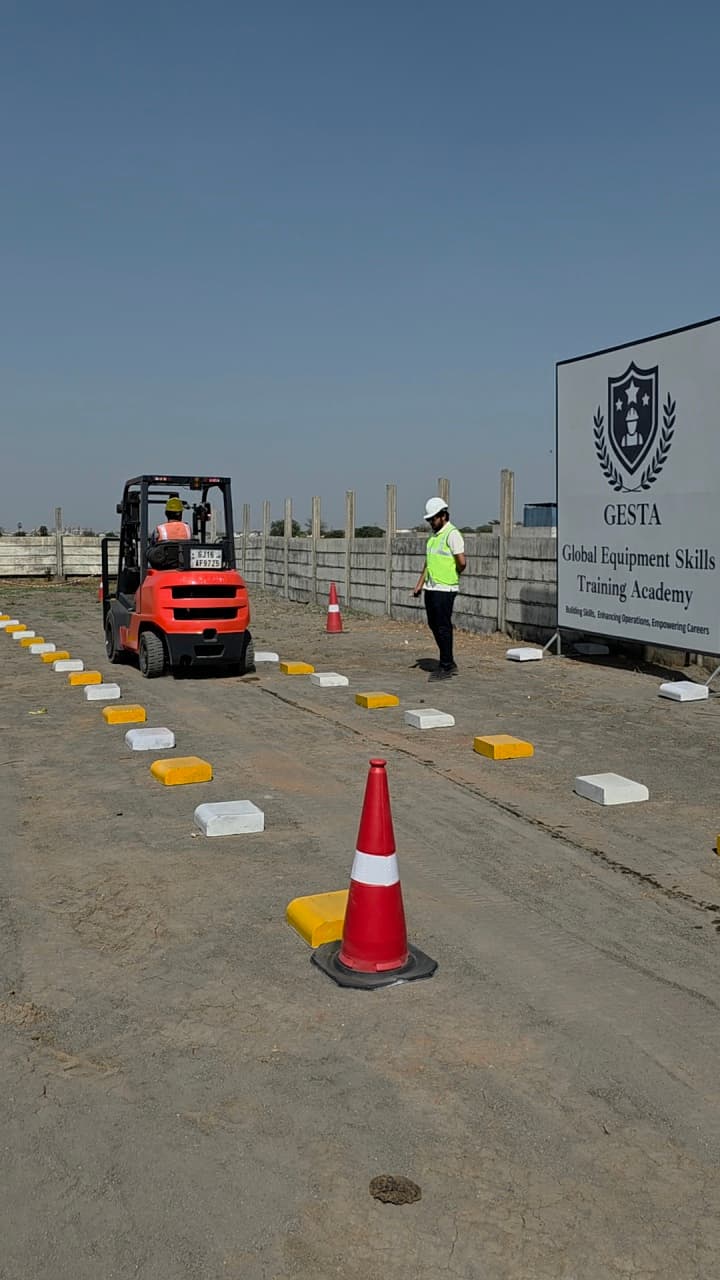
Forklift Operator Certification & Alignment in Nigeria
Under Factories Act Cap F1 LFN 2004; Employees' Compensation Act 2010; (oil&gas: NUPRC + OSHA/LOLER by reference), Nigeria follows the employer competency model.
Factories Act Cap F1 LFN 2004; Employees' Compensation Act 2010; (oil&gas: NUPRC + OSHA/LOLER by reference)
Fed. Ministry of Labour & Employment (Factories Inspectorate)
Employer competency model
gen. / refresher per employer
Governing laws & standards in Nigeria
- sourcePrimary lawFactories Act (Cap F1, LFN 2004) — general safety duty
No forklift-specific statute; industry applies OSHA 1910.178 / LEEA / IADC accredited training.
How GESTA certification maps to Nigeria
GESTA-STD-001 v1.1 — Forklift / Powered Industrial Truck Operator Competency: 12 clauses map to Nigeria's framework.
| Clause | Competency requirement | Nigeria reference |
|---|---|---|
| G1 | Scope & Application | Factories Act Cap F1 LFN 2004; Employees' Compensation Act 2010; (oil&gas: NUPRC + OSHA/LOLER by reference) |
| G2 | OPERATOR ELIGIBILITY | Factories Act Cap F1 LFN 2004; Employees' Compensation Act 2010; (oil&gas: NUPRC + OSHA/LOLER by reference) |
| G3 | TRAINER & ASSESSOR | Factories Act Cap F1 LFN 2004; Employees' Compensation Act 2010; (oil&gas: NUPRC + OSHA/LOLER by reference) |
| G4 | FORMAL (THEORY) INSTRUCTION | Factories Act Cap F1 LFN 2004; Employees' Compensation Act 2010; (oil&gas: NUPRC + OSHA/LOLER by reference) |
| G5 | Practical (hands-on) training | Factories Act Cap F1 LFN 2004; Employees' Compensation Act 2010; (oil&gas: NUPRC + OSHA/LOLER by reference) |
| G6 | WORKPLACE-SPECIFIC FAMILIARISATION | Factories Act Cap F1 LFN 2004; Employees' Compensation Act 2010; (oil&gas: NUPRC + OSHA/LOLER by reference) |
| G7 | ASSESSMENT | Factories Act Cap F1 LFN 2004; Employees' Compensation Act 2010; (oil&gas: NUPRC + OSHA/LOLER by reference) |
| G8 | CERTIFICATION & RECORDS | Factories Act Cap F1 LFN 2004; Employees' Compensation Act 2010; (oil&gas: NUPRC + OSHA/LOLER by reference) |
| G9 | REVALIDATION | Factories Act Cap F1 LFN 2004; Employees' Compensation Act 2010; (oil&gas: NUPRC + OSHA/LOLER by reference) |
| G10 | EQUIPMENT INTEGRITY | Factories Act Cap F1 LFN 2004; Employees' Compensation Act 2010; (oil&gas: NUPRC + OSHA/LOLER by reference) |
| G11 | SAFE OPERATION | Factories Act Cap F1 LFN 2004; Employees' Compensation Act 2010; (oil&gas: NUPRC + OSHA/LOLER by reference) |
| G12 | GOVERNANCE | Factories Act Cap F1 LFN 2004; Employees' Compensation Act 2010; (oil&gas: NUPRC + OSHA/LOLER by reference) |
GESTA training programs
Frequently asked questions
Do forklift operators need a licence in Nigeria?
Nigeria follows an employer-competency model: there is generally no government "forklift licence." The employer is legally responsible for ensuring each operator is trained, assessed and certified competent to a recognised standard. Factories Act Cap F1 LFN 2004; Employees' Compensation Act 2010; (oil&gas: NUPRC + OSHA/LOLER by reference)
Which law governs forklift operators in Nigeria?
Factories Act Cap F1 LFN 2004; Employees' Compensation Act 2010; (oil&gas: NUPRC + OSHA/LOLER by reference), enforced by Fed. Ministry of Labour & Employment (Factories Inspectorate).
How does a GESTA certificate help in Nigeria?
GESTA assesses operators to a harmonised competency standard benchmarked to OSHA 1910.178, ISO 3691 and other leading frameworks. It provides the recognised, auditable competency assessment that discharges the employer's legal duty.
Primary source: official text